

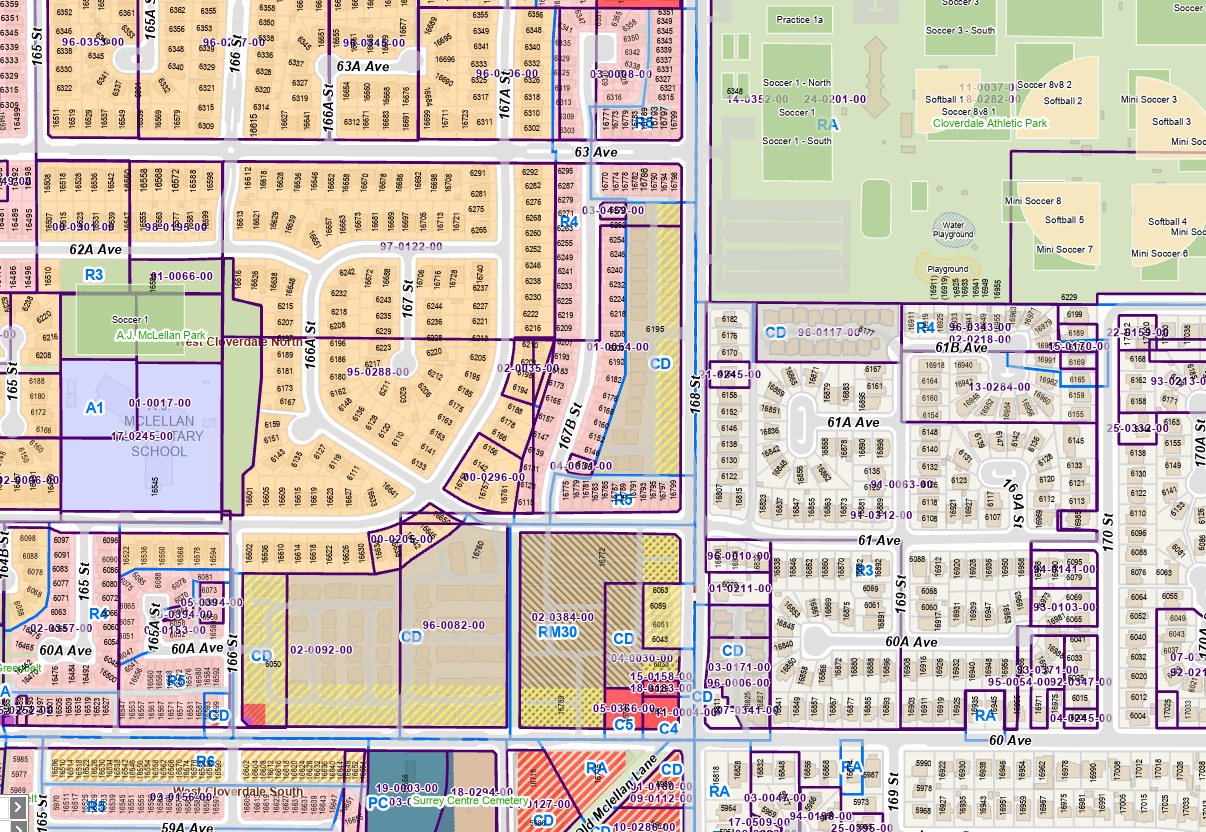
“I own a single-family home. How many units can I build?”
Thanks to British Columbia’s recent housing legislation, many properties that were once limited to a single detached home now allow three, four, or even six dwelling units. For many homeowners, this can be an intriguing opportunity.
Some are looking to generate additional rental income. Others are considering ways to provide housing options for their adult children and aging parents.
But here’s the mistake people are currently making.
They assume the answer is as simple as checking the zoning bylaw.
Checking the zoning is a key first step, but it’s just the start.
So how do you figure out what’s right for your property?
Here are three steps every property owner should take before investing in design.
Step 1: Check the Zoning
“What does the zoning allow?”
Following the introduction of Bill 44, municipalities across British Columbia updated their zoning bylaws to permit more housing in many traditional single-family neighbourhoods. Municipalities – depending on population size – were required to do this.
Depending on your municipality, lot size, proximity to frequent transit, and servicing, your property may now allow anywhere from one to six dwelling units.
That’s a lot more flexibility than previously existed.
But don’t stop there.
Too many people—and even some development advisors—treat zoning as the final answer. In reality, zoning is only the first layer of due diligence. Relying on it alone can lead to costly surprises later in the process.
So what other items do you need to look for?
Step 2: Review Site and Title Constraints
This is where many projects run into trouble.
I’ve seen property owners discover that four units are permitted under the zoning bylaw, only to learn later that a registered covenant restricts development. Others find that an easement removes a significant portion of the building area or that servicing upgrades add substantial costs to the project.
Just because zoning says “yes” doesn’t mean the project is feasible.
A review should at minimum consider:
- Title restrictions, covenants, and rights-of-way
- Lot dimensions, slope, and site access
- Environmental constraints and Development Permit Areas
- Water, sewer, and storm servicing
- Construction costs and local market conditions
Free Checklist and Guide
Experienced developers don’t rely on memory or assumptions. They follow a consistent due diligence process developed over years of experience.
Here is a Free Checklist and Guide to get you started.
Step 3: Test Different Development Scenarios
One of the biggest misconceptions in real estate development is that more units automatically mean more profit.
In a strong real estate market, that strategy may prove to be true.
But today’s market is a little different. Construction costs are higher, financing is more expensive, and buyers are more selective. Maximizing your density and unit count may just result in higher costs and unsold or unleased spaced.
You do not want to be in the situation.
On one property, four units may generate the best financial return. On another, a duplex with larger homes could outperform a fourplex. In some situations, a single-family home with a legal suite may produce stronger returns with significantly less risk.
A development proforma allows you to compare different scenarios by considering construction costs, financing, servicing expenses, anticipated sale prices, and overall profitability.
Rather than guessing which option is best, you can make an informed decision based on the financial performance of each scenario.
Summary
If you’re wondering how many units you can build on your property, the answer is almost never found in a single line of the zoning bylaw.
The real answer comes from understanding how zoning, title, servicing, site constraints, and financial feasibility all work together.
Two neighbouring properties with identical zoning can produce completely different outcomes.
One may be flat, well-serviced, and free of title restrictions. The other may have steep slopes, restrictive covenants, or costly servicing limitations that significantly reduce its development potential.
Taking the time to evaluate these factors before spending money on design or applications can save you thousands of dollars—and often reveal opportunities you might otherwise miss.
Could You Benefit From Expert Guidance?
If you’d like confidence before moving forward, SiteMentor Development Consultants provide industry-best development feasibility reports that identify what your property can realistically support, highlights potential constraints, and helps you determine the development strategy that makes the most sense for your goals.


